Return on investment is the only number that truly matters in real estate. Not the asking price, not the developer’s projected figures, not how often a neighbourhood shows up in investment discussions online. When the dust settles, one question answers everything: what is this property actually returning?
In Nigeria’s current market, that question has become easier to answer in some locations and harder in others. Infrastructure is reshaping accessibility, short-let platforms have created new income streams, and urban expansion is pushing growth into corridors that barely registered five years ago. For investors willing to look past the hype and focus on performance, 2026 offers genuine opportunity.
Here’s where the numbers are strongest and why.
Understanding ROI in Nigerian Real Estate
Real estate ROI comes from two sources, and the best investments deliver both.
Rental yield is the annual income a property generates expressed as a percentage of its purchase price. A property bought for ₦20 million that rents for ₦2 million per year yields 10%. In Nigeria’s stronger markets, yields typically range between 7% and 15% for long-term rentals, and considerably higher for well-managed short-let properties.
Capital appreciation is the increase in the property’s value over time. In high-growth corridors particularly around new infrastructure land and property values have doubled or more within five-year windows.
The most defensible investment strategy combines both: a property that generates income now while appreciating in the background. Keep that balance in mind as you read through these markets.
- Lekki Phase 1, Lagos — Highest Cash Flow Ceiling
Lekki Phase 1 is the strongest short-let market in Nigeria. The tenant profile — business travellers, diaspora visitors, corporate relocations — supports premium nightly rates, and well-furnished apartments in the right parts of the axis can generate annual ROI between 15% and 30% when managed properly.
Long-term rentals here also perform well, though the real edge comes from the short-let model. The trade-off is that short-let requires active management: furnishing costs, platform listings, cleaning between guests, and either personal involvement or a reliable property manager. Investors who treat it as a business rather than a passive income stream tend to get the most out of it.
ROI profile: High cash flow, moderate appreciation Best for: Short-let investors, premium rentals
- Yaba, Lagos — Most Reliable Rental Yield
Yaba doesn’t generate the glamour of Lekki, but it consistently outperforms in occupancy. The combination of UNILAG, YABATECH, and a growing tech ecosystem creates overlapping tenant demand — students, young professionals, and startup employees who want affordable, well-located housing and tend to renew leases rather than move frequently.
Rental yields typically fall between 8% and 12% annually, and vacancy periods are short. For investors who want predictable monthly income without the complexity of short-let management, Yaba is one of the most straightforward markets in Lagos.
ROI profile: Consistent rental yield, low vacancy Best for: Long-term rental investors
- Ibeju-Lekki, Lagos — Strongest Appreciation Story
Ibeju-Lekki’s ROI case is almost entirely appreciation-driven, at least for now. The Dangote Refinery, Lekki Free Trade Zone, and Deep Sea Port represent one of the largest concentrations of industrial investment in West Africa, and land values in the corridor have reflected that — rising significantly since 2020 and continuing to climb as development progresses.
Rental demand is forming but still early-stage. Investors in this market are primarily buying into future value rather than current income, and those with a five-to-ten year horizon have historically been rewarded in comparable situations.
ROI profile: High capital appreciation potential Best for: Land banking, long-term investors
- Epe, Lagos State — Early-Stage Upside
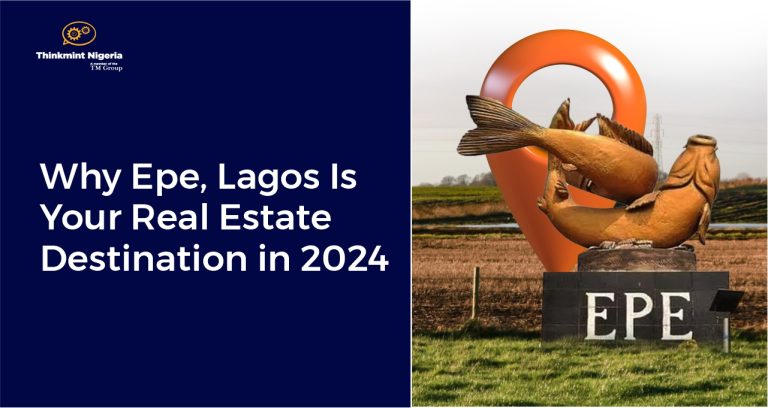
Epe sits at an interesting point in its growth curve — no longer purely speculative, but not yet fully priced. The Lekki-Epe International Airport, improved road connectivity, and Alaro City development have all driven meaningful price appreciation over the past several years, while land remains considerably cheaper than Lekki.
Both rental demand and land appreciation are active here simultaneously, which makes Epe one of the few markets where an investor can realistically target both return types from a single position.
ROI profile: Growing rental demand, strong land appreciation Best for: Investors wanting a hybrid return
- Lugbe, Abuja — Balanced Returns, Accessible Entry
Lugbe appeals to a specific type of investor: someone who wants exposure to Abuja’s growth without paying central Abuja prices. Civil servants, government contractors, and private sector workers have made it one of the FCT’s most consistently occupied rental markets, and two and three-bedroom apartments absorb demand steadily.
Rental yields average between 7% and 10% annually — not the highest on this list, but reliable. Acquisition costs remain manageable, which keeps the yield-to-cost ratio attractive for investors working with mid-range capital.
ROI profile: Steady rental income, moderate appreciation Best for: Mid-income rental market
- Gwarinpa, Abuja — Lowest Risk, Consistent Returns
Gwarinpa is the closest thing to a low-volatility real estate investment in Nigeria. As one of West Africa’s largest planned residential estates, it offers organised infrastructure, consistent family tenant demand, and property values that have appreciated gradually and reliably over the years.
The returns here won’t make headlines, but they won’t disappoint either. For investors prioritising capital preservation alongside income, or those building a portfolio who want a stable anchor, Gwarinpa delivers.
ROI profile: Stable income, steady appreciation Best for: Conservative, long-term investors
- Port Harcourt, Rivers State — Corporate Rental Premium
Port Harcourt operates on economics that most other Nigerian cities can’t replicate. The oil and gas sector generates demand for corporate housing — expatriates, senior contractors, and industry professionals whose accommodation is often employer-funded and therefore less price-sensitive than the average tenant.
Serviced apartments and duplexes in GRA and similar areas command strong rents and attract long-term occupants. It’s a more specialised market than Lagos or Abuja, but for investors who position correctly, the rental income potential is among the highest in the country.
ROI profile: High rental income, employer-funded tenants Best for: Serviced apartments, corporate housing
- Ibadan, Oyo State — Best Yield-to-Cost Ratio
The case for Ibadan is a simple one: low property prices, large population, and genuine rental demand from students and workers produce yield percentages that would be difficult to replicate in Lagos or Abuja at the same capital outlay.
Rental yields range from 6% to 9% annually — on the lower end in percentage terms, but the entry cost is low enough that the absolute return relative to investment compares favourably. For first-time investors or those looking to build volume in a portfolio, Ibadan offers scale that expensive markets simply can’t.
ROI profile: Strong yield-to-cost, high volume opportunity Best for: First-time investors, portfolio scaling
- Uyo, Akwa Ibom State — Emerging, Underpriced
Uyo is consistently overlooked in national investment conversations, which is largely why the numbers still work. The city has solid infrastructure for its size, a growing population, and rising private sector activity — but entry prices haven’t caught up with those fundamentals yet.
Both rental yields and capital appreciation are trending upward from a low base. Investors looking for diversification outside Lagos and Abuja, or those with limited capital seeking genuine growth potential, will find Uyo worth a closer look.
ROI profile: Early appreciation, affordable entry Best for: Budget-conscious investors, regional diversification
- Ayetoro, Lagos State — Land Banking Returns
Ayetoro’s investment case is straightforward: it’s adjacent to Ibeju-Lekki, significantly cheaper, and absorbing spillover demand as that corridor’s prices rise. Infrastructure expansion from the broader Lagos metropolitan area is gradually reaching the zone, and developer interest has increased.
The return here is primarily long-term appreciation rather than near-term rental income. For investors who already have income-generating properties and want to add a growth position at a low entry point, Ayetoro fits that role.
ROI profile: Long-term capital appreciation Best for: Land investors, portfolio diversification
Rental Yield vs. Appreciation: Choosing Your Strategy
Neither approach is universally better — it depends on what you need the investment to do.
If you need regular income now, focus on markets with proven rental demand: Lekki Phase 1, Yaba, Port Harcourt, or Lugbe. These generate cash flow you can use or reinvest while the property appreciates in the background.
If you’re building wealth for the long term and don’t need immediate income, growth corridors like Ibeju-Lekki, Epe, or Ayetoro offer higher appreciation upside at lower entry prices.
The most resilient portfolios tend to include both — income-producing properties that fund holding costs, alongside growth positions in emerging corridors that build equity over time.
What Consistently Destroys ROI
A few patterns appear repeatedly among investors who underperform. Overpaying in a popular market leaves little room for yield. Buying without verifying title exposes the entire investment to legal risk. Neglecting property management leads to deterioration and tenant turnover that erodes returns year on year. And investing based on projected future prices rather than current fundamentals has caught out many investors in stalled developments.
ROI isn’t built in the buying decision alone — it’s built and protected over the entire ownership period.
The opportunity in Nigerian real estate in 2026 is real, but it’s market-specific. The locations on this list aren’t interchangeable. Each one suits a different investor profile, capital level, and return expectation. Match the market to your strategy, verify every document, and manage what you own.
That’s how property builds lasting wealth.
Browse verified listings across Nigeria’s top-performing markets at thinkmint.ng