
LAGUNA BAY — Abidjan, Côte d’Ivoire
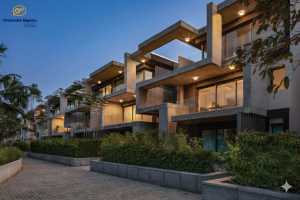
North of the Ébrié Lagoon in Abidjan, Laguna Bay is
a multi-residential development that navigates the
tension between landscape and architecture, urbanity
and retreat. Designed by SAOTA, the project is both
sculptural and deeply contextual, engaging the
rhythms of light, shadow, and materiality to create an
inhabitable topography rather than a singular architectural object.
A defining feature is its layered concrete façades, which extend beyond structure to modulate privacy and shading — a critical response to Abidjan’s humid, tropical climate. These sculptural forms negotiate the transition from public to private, depth to enclosure, giving the building an ever-changing presence within the city’s shifting light. Informed by SAOTA’s precision of geometry and spatial articulation, the interplay of solid and void introduces a dynamic that dissolves the boundary between the built form and its surroundings.
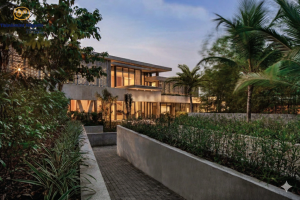
At the base, a terraced plinth anchors the structure within its urban setting, mitigating scale and aligning it with neighbouring villas. By stepping back at higher levels, the massing shifts from density to openness, unfolding into generous terraces that extend living spaces outward. This reinforces the composition’s horizontality and establishes a fluid dialogue between architecture and landscape — a defining theme of the project.
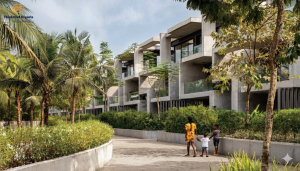
Comprising 80 residences ranging from 150m² to 350m², the development rejects uniformity in favour of a more nuanced, human-scaled composition. Variation in apartment configurations introduces spatial diversity, ensuring no two experiences within the building are identical. This sense of individuality extends to shared spaces, where landscaped courtyards and circulation routes choreograph movement and interaction, encouraging a collective urban experience.
At ground level, granite plinth walls mediate thresholds between public and private realms, balancing openness with retreat. Framed views and shaded promenades blur interior and exterior boundaries, integrating the tropical landscape as an essential architectural element rather than ornament. Nature becomes a co-author in the spatial experience.
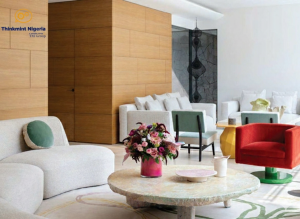
Inside, Claude Missir’s interiors build on this architectural narrative, layering texture and colour in contrast to the building’s restrained material palette. His playful gestures bring warmth and social vitality to the spaces, reflecting Abidjan’s cultural vibrancy while maintaining a refined, contemporary tone.