
Off-plan property investment has become one of the most talked-about real estate strategies in Nigeria — and for good reason. Developers across Lagos, Abuja, and Port Harcourt are aggressively marketing projects still under construction, promising lower entry prices, flexible payment plans, and strong future returns. And the macro fundamentals backing those promises are hard to …
Author Archives: Charles
Can You Still Buy Property With an Initial Deposit in 2026?

For many Nigerians, owning property still feels financially overwhelming. Rising construction costs, inflation, and increasing land prices have made many buyers wonder: “Can I still buy property without paying the full amount up front?” The answer in 2026 is yes, but only if you understand how modern property financing works. Today, developers, mortgage platforms, and …
Continue reading “Can You Still Buy Property With an Initial Deposit in 2026?”
Top Nigerian Property Markets by ROI in 2026

Return on investment is the only number that truly matters in real estate. Not the asking price, not the developer’s projected figures, not how often a neighbourhood shows up in investment discussions online. When the dust settles, one question answers everything: what is this property actually returning? In Nigeria’s current market, that question has become …
Continue reading “Top Nigerian Property Markets by ROI in 2026”
Where Land Prices Are Rising Fastest in Nigeria in 2026

Land investment in Nigeria has always rewarded the early mover. The investors who bought in Lekki twenty years ago, or along the Epe corridor a decade ago, didn’t do so because those areas were already valuable — they did so because they could see where development was headed. That same logic applies today. Across Nigeria, …
Continue reading “Where Land Prices Are Rising Fastest in Nigeria in 2026”
Top 10 Places in Nigeria to Invest in Rental Property in 2026

Nigeria’s rental market doesn’t get enough credit. While most property conversations centre on land banking or buying to sell, a growing number of investors are quietly building wealth through rental income and doing it well. The fundamentals are strong: urban migration is accelerating, more young professionals are renting by choice, and short-let platforms have opened …
Continue reading “Top 10 Places in Nigeria to Invest in Rental Property in 2026”
A Bridge That Moves More Than Traffic: What the Opebi–Mende–Ojota Link Bridge Means for Lagos Real Estate

The commissioning of Lagos’s newest arterial link is not simply a transport story. For property owners, investors, and homebuyers along the Mende–Maryland corridor, it marks a decisive shift in how one of the city’s most connected residential belts will be valued. The Bridge That Was Twenty Years in the Making On April 8, 2026, President …
Property Appreciation Trends in Nigeria: Where Prices Have Doubled in 5 Years
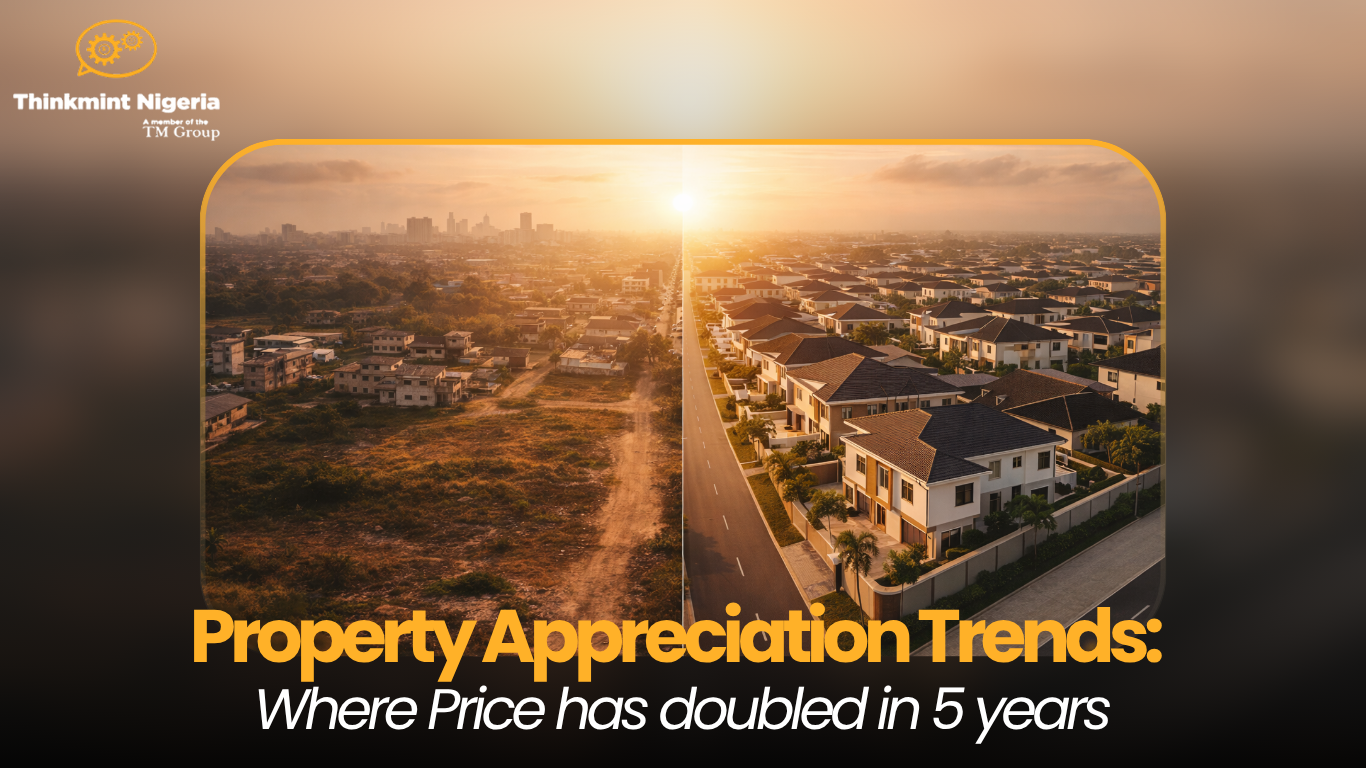
Nigeria’s real estate market has quietly created millionaires over the past five years. While many people were waiting, watching, or saving, smart investors were buying land and properties in emerging locations and today, some of those assets have doubled, tripled, or even quadrupled in value. This is not speculation. It’s a pattern. In this guide, …
Continue reading “Property Appreciation Trends in Nigeria: Where Prices Have Doubled in 5 Years”
The Rise of Female Property Investors: Trends and Insights

Nigeria’s real estate market is evolving fast, and one of the most exciting trends is the increasing presence of women as property investors. Over the last decade, Nigerian women have gone from being largely passive participants in real estate to driving strategic investments, both residential and commercial. In this article, we explore the rise of …
Continue reading “The Rise of Female Property Investors: Trends and Insights”
Property Investment Strategies for Career Women in Nigeria

In today’s Nigeria, career women are earning more, leading companies, building businesses, and shaping industries. Yet when it comes to long-term wealth building, many still underestimate one powerful asset class: Real estate. Property investment remains one of the most reliable ways to build generational wealth, hedge against inflation, and secure financial independence. For career women …
Continue reading “Property Investment Strategies for Career Women in Nigeria”
How Mortgages Can Help Nigerian Women Achieve Property Ownership Faster

The Numbers Tell a Difficult Story Only 2.5% of Nigerian women solely own a home. That figure drawn from the World Bank Gender Data Portal sits alongside another that is equally striking: 89% of Nigerian women do not own any property at all. Meanwhile, men’s sole ownership stands at 24%. The gap is not a …
Continue reading “How Mortgages Can Help Nigerian Women Achieve Property Ownership Faster”